



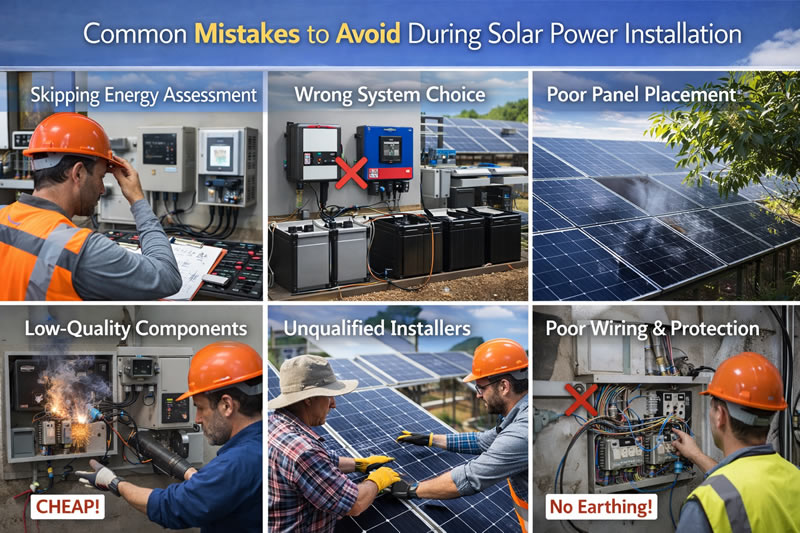
Common Mistakes to Avoid During Solar Power Installation
Solar power installation is a long-term investment that can deliver reliable energy and significant savings. However, poor planning or improper installation can reduce system performance and increase costs. Understanding the mistakes to avoid during solar power installation helps ensure efficiency, safety, and durability.
1. Skipping Proper Energy Assessment
One of the most common mistakes to avoid is installing a solar system without evaluating your actual energy needs.
Why it matters:
-
Leads to underpowered or oversized systems
-
Causes frequent power shortages or unnecessary expenses
Always conduct a detailed load analysis before installation.
2. Choosing the Wrong Type of Solar System
Selecting an unsuitable system (on-grid, off-grid, or hybrid) can limit performance.
Mistakes to avoid:
-
Installing on-grid systems where grid power is unreliable
-
Choosing off-grid systems without adequate battery capacity
The right system should match your power availability and usage goals.
3. Poor Panel Placement and Orientation
Incorrect panel positioning reduces sunlight exposure.
Mistakes to avoid:
-
Installing panels in shaded areas
-
Using wrong tilt angles
-
Ignoring roof direction and sun path
Proper orientation ensures maximum energy generation.
4. Using Low-Quality Components
Trying to cut costs by purchasing cheap components is a costly error.
Mistakes to avoid:
-
Low-grade solar panels
-
Substandard inverters or batteries
-
Non-certified electrical accessories
Quality components last longer and perform better over time.
5. Ignoring Professional Installation
DIY or unqualified installers often lead to technical and safety issues.
Mistakes to avoid:
-
Hiring installers without certification
-
Ignoring electrical safety standards
-
Poor wiring and grounding
Professional installation ensures system safety and efficiency.
6. Inadequate Battery Sizing
Improper battery sizing affects system reliability, especially during outages.
Mistakes to avoid:
-
Underestimating backup power needs
-
Not considering battery lifespan and capacity
Correct battery sizing ensures consistent energy availability.
7. Poor Wiring and System Protection
Electrical mistakes can cause system failures or safety hazards.
Mistakes to avoid:
-
Loose or exposed wiring
-
Lack of surge protection
-
Improper earthing
Proper electrical protection safeguards both equipment and users.
8. Ignoring Maintenance Planning
Many users focus only on installation and forget long-term maintenance.
Mistakes to avoid:
-
Not scheduling routine inspections
-
Ignoring cleaning and monitoring needs
Maintenance planning keeps the system operating at peak performance.
Avoiding these mistakes to avoid during solar power installation ensures your system delivers reliable, efficient, and long-lasting performance. Proper planning, quality components, and professional expertise are essential for a successful solar investment.
Comments are closed