



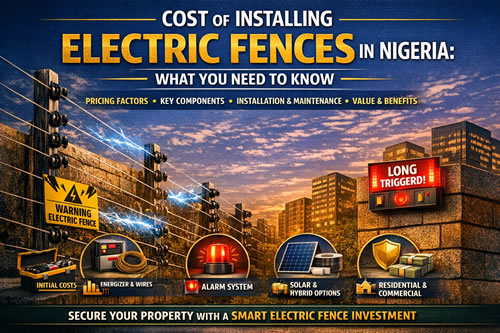
Electric fencing has become one of the most effective security solutions for homes and businesses in Nigeria. While many property owners recognize its benefits, one of the most common questions is: How much does it cost to install an electric fence?
Understanding the cost structure can help you plan properly and make the right investment for your security needs.
1. Factors That Affect Electric Fence Costs
The cost of installing an electric fence in Nigeria is not fixed—it varies depending on several key factors:
✔ Size of the Property
The larger the perimeter of your property, the more materials and labor will be required, which increases the total cost.
✔ Type of Electric Fence System
Different systems come with different price ranges:
- Wall-top fencing (most affordable)
- Free-standing fencing (for large properties)
- Solar or hybrid systems (slightly higher cost due to power setup)
✔ Quality of Materials
High-quality wires, energizers, and components typically cost more but provide better durability and reliability.
✔ Installation Complexity
If your property has uneven terrain, complex structures, or long boundaries, installation costs may increase.
2. Main Components That Influence Pricing
An electric fence system is made up of several essential components, each contributing to the overall cost:
- Energizer: The central unit that powers the system
- Electric wires: Installed around the perimeter
- Insulators: Prevent energy loss
- Earthing system: Ensures effective energy flow
- Alarm system: Detects tampering or faults
The type and quality of these components significantly impact the final installation price.
3. Installation vs. Maintenance Costs
While installation is the major upfront cost, electric fencing is relatively affordable to maintain.
- Initial installation: Covers materials, labor, and setup
- Maintenance costs: Mostly involve periodic checks and minor repairs
- Long lifespan: Systems can last many years with proper care
Compared to hiring multiple security personnel, electric fencing is often more cost-effective over time.
4. Why Electric Fencing Is Worth the Investment
Even though electric fencing may seem like a significant initial expense, it delivers long-term value:
✔ Continuous Protection
The system operates 24/7 without interruption, reducing reliance on human security.
✔ Reduced Security Risks
It actively deters and detects intruders, preventing costly damage or theft.
✔ Integration with Other Systems
Electric fences can be connected to alarms, CCTV, and lighting systems for enhanced security.
✔ Scalability
You can expand the system as your property or security needs grow.
5. Typical Use Cases in Nigeria
Electric fences are widely used across different property types, which also influences cost:
- Residential homes
- Estates and gated communities
- Office buildings and commercial facilities
- Warehouses and industrial sites
- Farms and agricultural land
Each environment may require a different setup, affecting the final pricing.
6. Tips to Get the Best Value
To ensure you get the most from your investment:
- Choose professional Electric Fence installers to avoid faulty setup
- Use quality components for durability
- Consider solar or hybrid systems in areas with unstable electricity
- Request detailed quotations before starting the project
These steps will help you avoid hidden costs and ensure long-term efficiency.
Conclusion
The cost of installing an electric fence in Nigeria depends on several variables, including property size, system type, and material quality. While the upfront investment may vary, electric fencing offers a cost-effective, reliable, and long-term security solution.
For homeowners and businesses looking to enhance their security, electric fencing is not just an expense—it is a smart and necessary investment in safety and peace of mind.
Comments are closed