



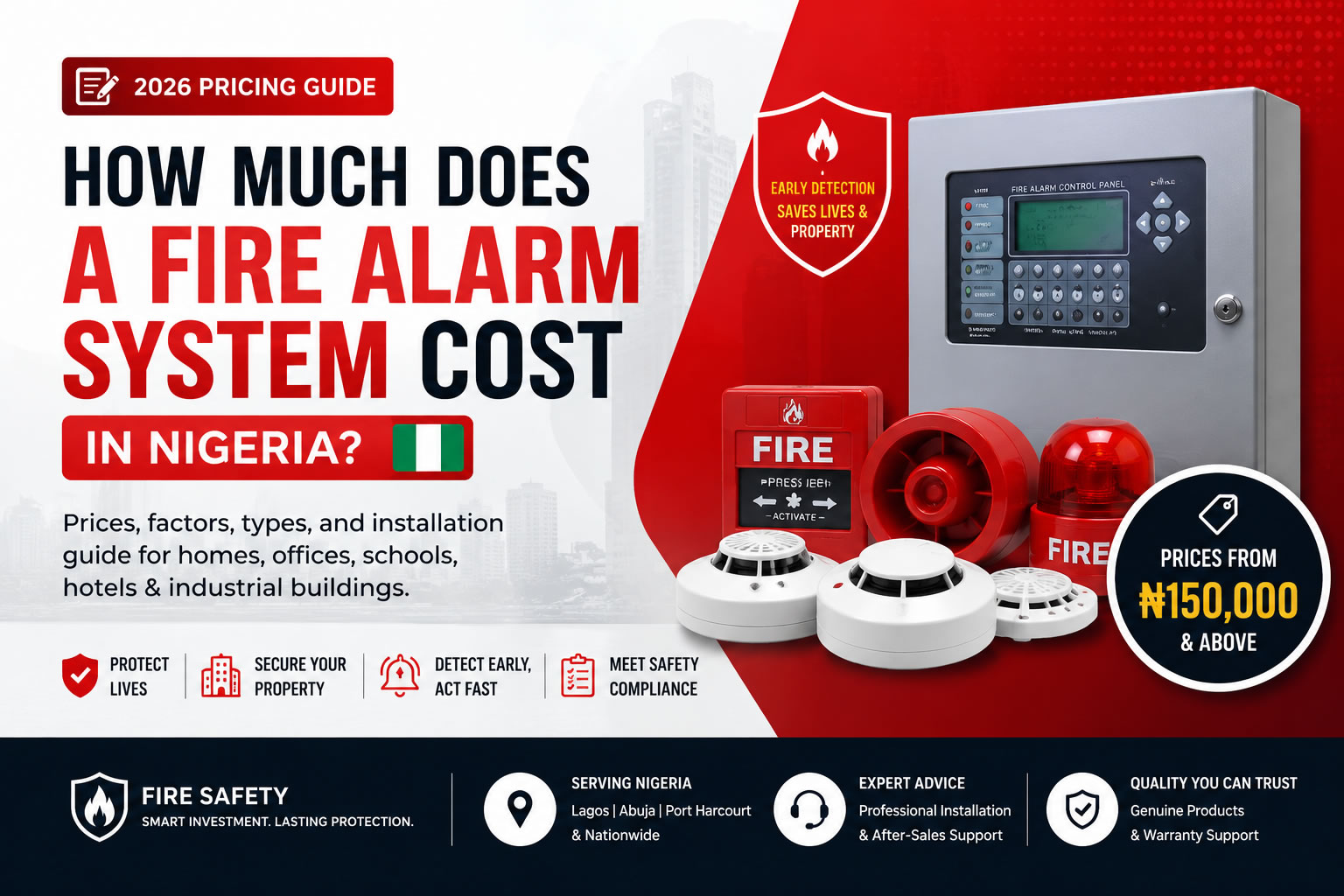
Fire outbreaks remain one of the biggest threats to homes, offices, schools, hotels, warehouses, and commercial buildings in Nigeria. Installing a reliable fire alarm system is no longer optional — it is an essential safety investment that protects lives and property.
One of the most common questions property owners ask is:
“How much does a fire alarm system cost in Nigeria?”
In this guide, we break down the average cost of fire alarm systems, installation factors, and what you should expect when planning your budget in 2026.
What Is a Fire Alarm System?
A fire alarm system is a network of devices designed to detect smoke, heat, or fire and alert occupants immediately. Typical components include:
- Smoke detectors
- Heat detectors
- Fire alarm control panels
- Sounders and sirens
- Manual call points
- Emergency strobe lights
Modern systems can also integrate with CCTV, sprinklers, access control, and emergency evacuation systems.
Average Fire Alarm System Prices in Nigeria (2026)
The cost of a fire alarm system in Nigeria depends on the building size, device quality, and installation complexity.
Small Buildings and Apartments
Suitable for:
- Small offices
- Shops
- Flats
- Mini warehouses
Estimated Cost:
- ₦150,000 – ₦600,000
Medium Commercial Buildings
Suitable for:
- Schools
- Churches
- Medium offices
- Hotels
Estimated Cost:
- ₦700,000 – ₦3,500,000
Large Industrial and Commercial Facilities
Suitable for:
- Factories
- Large hotels
- Malls
- Hospitals
- Warehouses
Estimated Cost:
- ₦5,000,000 and above
Factors That Affect Fire Alarm System Cost
1. Type of Fire Alarm System
Conventional Fire Alarm System
- More affordable
- Best for smaller buildings
- Easier to install
Addressable Fire Alarm System
- More advanced
- Identifies exact fire location
- Ideal for large buildings
Addressable systems usually cost more but offer better monitoring and faster emergency response.
2. Number of Devices Needed
The more smoke detectors, call points, sirens, and sensors required, the higher the overall project cost.
3. Building Size and Structure
Large multi-floor buildings require:
- More wiring
- More detectors
- Additional control panels
- Advanced configuration
This increases installation costs significantly.
4. Installation and Labor Charges
Professional installation is important for system reliability and compliance with fire safety standards.
Installation costs in cities like Lagos, Abuja, and Port Harcourt may be higher due to labor and logistics.
Why Cheap Fire Alarm Systems Can Be Risky
Many low-cost fire alarm products sold in the market are unreliable or counterfeit. Poor-quality systems may:
- Fail during emergencies
- Trigger false alarms
- Have short lifespans
- Lack warranty support
Investing in quality equipment and professional installation can save lives and prevent major losses.
Benefits of Installing a Fire Alarm System
A professionally installed fire alarm system helps:
- Detect fire early
- Reduce property damage
- Protect lives
- Improve emergency response
- Meet safety compliance requirements
- Lower business risk
For businesses, it also improves customer confidence and workplace safety.
How to Choose the Right Fire Alarm Installer in Nigeria
Before hiring a fire alarm company, check:
- Experience and certifications
- Product warranty
- Previous projects
- Maintenance support
- Response time
- Quality of equipment used
Always request a site inspection and detailed quotation before installation begins.
Final Thoughts
The cost of a fire alarm system in Nigeria varies based on your building type and safety requirements. Whether you own a small office or a large commercial facility, investing in a reliable fire alarm system is one of the smartest safety decisions you can make.
A properly designed system provides early warning, minimizes damage, and helps protect what matters most.
If you are planning to install a fire alarm system, consult a professional fire safety company in Nigeria for a customized assessment and quotation.
Comments are closed