



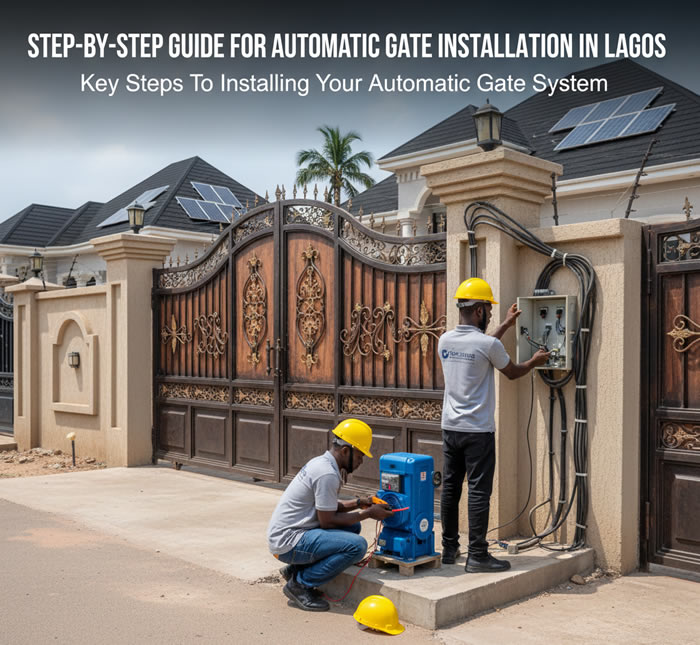
Step-by-Step Guide for Automatic Gate Installation in Lagos
Automatic gates are no longer a luxury in Lagos. With security concerns, heavy traffic, and daily convenience needs, many homeowners and businesses are installing automated gate systems. However, a successful installation depends on following the correct steps to installing automatic gates, especially under Lagos conditions such as unstable power supply, flooding, and heavy steel gates.
This guide walks you through each step clearly, from planning to final testing.
Step 1: Assess the Gate Type and Property Space
The first step in installing automatic gates is understanding your compound layout and gate type.
You must determine:
-
Whether the gate is swing or sliding
-
Available space for gate movement
-
Gate material and estimated weight
-
Whether the property faces a busy road
In Lagos:
-
Sliding gates work best for road-facing or tight spaces
-
Swing gates work well in estates and flood-prone areas
Skipping this assessment leads to wrong motor selection and future failures.
Step 2: Measure the Gate and Choose the Right Motor
One of the most important steps to installing automatic gates is motor selection.
Key measurements include:
-
Gate width and height
-
Gate weight (very important)
-
Frequency of daily use
Lagos tip:
Always choose a motor stronger than the gate’s actual weight. Heat, dust, rust, and repainting make gates heavier over time. Undersized motors fail quickly.
Step 3: Prepare the Gate Structure and Foundation
Before installing the motor, the gate itself must be structurally sound.
This step involves:
-
Fixing misaligned hinges or rollers
-
Reinforcing weak gate frames
-
Ensuring smooth manual movement
For sliding gates:
-
Concrete base must be solid
-
Track must be straight and level
-
Drainage must be planned to avoid flooding
Poor foundation work is a common reason automatic gates fail in Lagos.
Step 4: Install the Gate Motor and Mechanical Parts
This is the core of the installation process.
Depending on gate type:
-
Swing gate motors are mounted on pillars or walls
-
Sliding gate motors are fixed beside the gate with a rack attached
During this step:
-
Motor alignment must be precise
-
Bolts and mounts must be firm
-
Gate movement must remain smooth
This is one of the most technical steps to installing automatic gates and should be handled by experienced installers.
Step 5: Electrical Wiring and Power Setup
Power setup is critical in Lagos.
This step includes:
-
Connecting the motor to power supply
-
Installing control boards
-
Proper earthing for safety
Because power outages are common, it’s best to:
-
Add battery backup
-
Connect to inverter or solar systems
Without backup power, automatic gates become unreliable and inconvenient.
Step 6: Install Safety and Access Control Devices
Automatic gates must be safe and controlled.
Common devices installed at this stage:
-
Remote controls
-
Keypads or access cards
-
Safety sensors (photocells)
Safety sensors prevent the gate from closing on vehicles or people—very important in homes with children or staff.
This step ensures the gate is both functional and safe.
Step 7: Configure and Program the Gate System
Once installation is complete, the system must be programmed.
This includes:
-
Setting opening and closing limits
-
Adjusting gate speed
-
Configuring auto-close timing
Proper configuration improves performance and extends motor lifespan. It is a key part of the steps to installing automatic gates that many installers rush or ignore.
Step 8: Test the Gate Thoroughly
Before final handover, the gate must be tested repeatedly.
Testing should cover:
-
Smooth opening and closing
-
Remote response range
-
Safety sensor reaction
-
Backup power performance
Any noise, delay, or jerking should be fixed immediately.
Step 9: Final Inspection and User Training
The last step is often overlooked.
The installer should:
-
Explain how to use the gate properly
-
Show manual override options
-
Give basic maintenance advice
This ensures the homeowner can use the gate confidently and avoid accidental damage.
Common Mistakes to Avoid in Lagos
-
Choosing cheap, low-capacity motors
-
Ignoring drainage for sliding gates
-
Skipping backup power
-
Using untrained installers
Avoiding these mistakes makes the installation last longer and perform better.
Following the correct steps to installing automatic gates is essential for long-term performance in Lagos. From proper assessment and motor selection to solid foundation work and backup power, each step plays a critical role.
When installed correctly, automatic gates provide security, convenience, and peace of mind—perfectly suited for Lagos living.
Comments are closed