



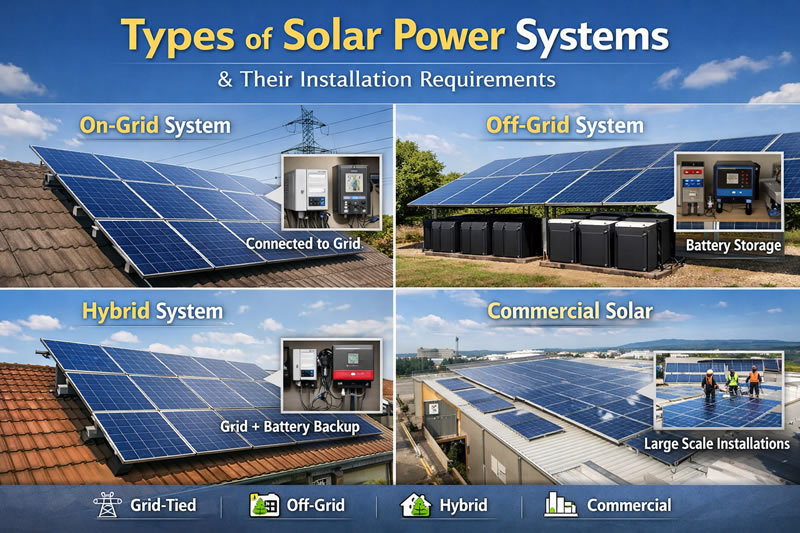
Solar energy has become a reliable solution for homes and businesses seeking stable and cost-effective electricity. Understanding the different solar energy systems available and their installation requirements helps you choose the right option for your power needs, budget, and location.
1. On-Grid (Grid-Tied) Solar Power System
An on-grid solar power system is connected directly to the public electricity grid. It generates power during the day and supplements supply from the grid when needed.
Key Features
-
No battery storage required
-
Lower installation cost
-
Ideal for areas with stable grid power
Installation Requirements
-
Connection to the national grid
-
Solar panels mounted on rooftops or ground frames
-
Grid-compatible inverter
-
Net metering setup (where available)
-
Professional electrical approval
Best for: Homes and offices looking to reduce electricity bills without needing backup power.
2. Off-Grid Solar Power System
Off-grid systems operate independently of the public grid and rely entirely on solar energy stored in batteries.
Key Features
-
Complete energy independence
-
Works in areas without grid electricity
-
Requires battery storage
Installation Requirements
-
Solar panels with proper orientation and tilt
-
Charge controller to manage battery charging
-
Deep-cycle or lithium batteries
-
Off-grid inverter
-
Adequate space for battery installation
-
Accurate load assessment
Best for: Rural areas, remote locations, and users who want total power independence.
3. Hybrid Solar Power System
A hybrid system combines features of both on-grid and off-grid systems. It uses batteries for backup while remaining connected to the grid.
Key Features
-
Power backup during outages
-
Flexible energy usage
-
Better energy management
Installation Requirements
-
Solar panels and hybrid inverter
-
Battery bank for energy storage
-
Grid connection
-
Smart energy management system
-
Professional system design
Best for: Urban homes and businesses needing backup power with grid support.
4. Standalone Solar Power System
Standalone systems are designed for specific appliances or small applications rather than powering an entire building.
Key Features
-
Powers single or limited devices
-
Simple setup
-
Low energy output
Installation Requirements
-
Small solar panel
-
Battery (optional)
-
Simple inverter or DC output
-
Basic mounting structure
Best for: Streetlights, water pumps, security systems, and small cabins.
5. Commercial and Industrial Solar Systems
These are large-scale solar installations designed to meet high energy demands.
Key Features
-
High power output
-
Reduces operational costs
-
Scalable system design
Installation Requirements
-
Large roof or land area
-
Structural assessment
-
High-capacity inverters and panels
-
Electrical permits and safety compliance
-
Professional engineering design
Best for: Factories, malls, schools, hospitals, and office complexes.
Choosing among the different solar energy systems depends on factors such as power demand, grid availability, budget, and desired level of independence. Proper installation is essential for safety, efficiency, and long-term performance. Working with certified solar professionals ensures your system is correctly designed and installed to meet your energy needs.
Comments are closed