



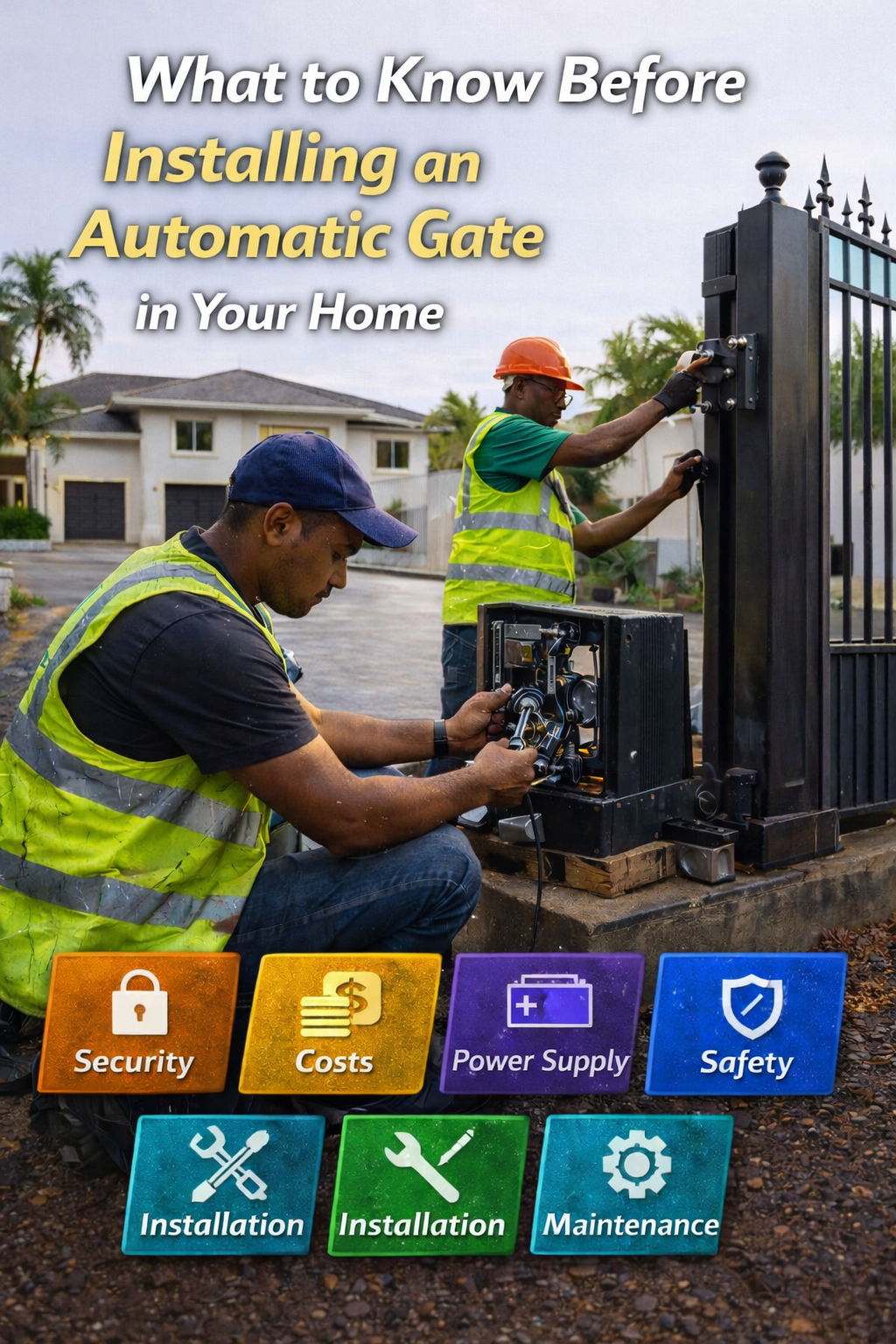
What to Know Before Installing an Automatic Gate in Your Home
Automatic gates add security, convenience, and value to residential properties. However, before installing automatic gate systems in your home, it is important to understand key factors that affect performance, cost, and long-term reliability. Proper planning helps you avoid common mistakes and ensures you get the best return on your investment.
1. Purpose and Security Needs
Before installing an automatic gate, determine why you need it:
-
Improved security and controlled access
-
Convenience for daily entry and exit
-
Enhanced property value and aesthetics
Your purpose will influence the type of gate, motor strength, and additional features required.
2. Gate Type Selection
Choosing the right gate type is crucial when installing automatic gate systems:
-
Swing gates: Suitable for wide entrances and flat surfaces
-
Sliding gates: Ideal for limited space and high-security needs
The layout of your driveway and available space should guide your decision.
3. Power Supply and Backup Options
Automatic gates rely on consistent power supply. In areas with unstable electricity:
-
Consider backup batteries or inverter systems
-
Install surge protectors to prevent electrical damage
-
Ensure proper wiring and grounding
Reliable power planning prevents unexpected gate failures.
4. Gate Motor Capacity
The motor must match the gate’s size and weight:
-
Lightweight gates require standard motors
-
Heavy steel or long gates need heavy-duty motors
Using an underpowered motor can lead to frequent breakdowns and increased maintenance costs.
5. Safety Features
Safety is essential when installing automatic gate systems at home:
-
Obstacle detection sensors
-
Emergency manual release mechanisms
-
Auto-stop and reverse functions
These features help protect people, vehicles, and pets from accidents.
6. Weather and Environmental Factors
Rain, dust, and humidity can affect gate performance:
-
Use weather-resistant materials and motors
-
Apply anti-rust coatings
-
Ensure proper drainage around gate tracks
This is especially important in areas with heavy rainfall.
7. Professional Installation Matters
Poor installation leads to alignment issues, motor strain, and safety risks. Always:
-
Hire experienced installers
-
Ensure proper foundation and structural support
-
Request warranty and after-installation support
Professional expertise ensures smooth operation and durability.
8. Maintenance Requirements
Automatic gates need regular maintenance:
-
Lubrication of moving parts
-
Sensor cleaning
-
Motor and control panel inspections
Planning for maintenance reduces long-term repair costs.
Installing an automatic gate is a smart upgrade for any home, but success depends on proper planning and professional execution. By understanding these key considerations before installing automatic gate systems, homeowners can enjoy enhanced security, convenience, and long-lasting performance.
Comments are closed