



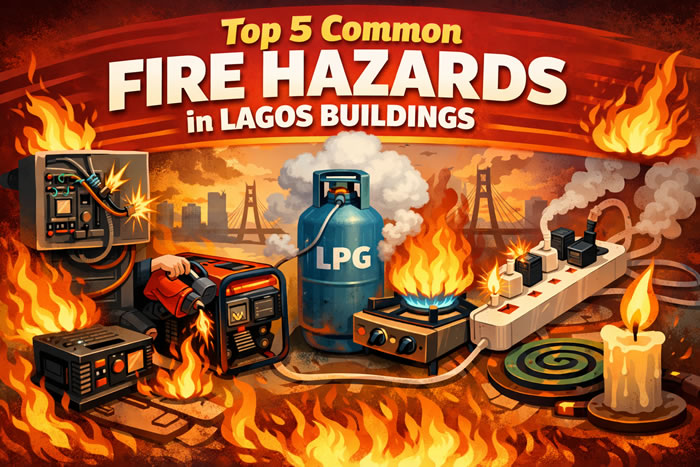
Lagos is a city of unmatched energy, rapid growth, and bustling commerce. But with dense urban living, heavy commercial activity, and unique infrastructural challenges, Lagos buildings face a distinct set of fire risks. From the high-rises of Victoria Island to the bustling plazas of Ikeja and the residential estates of Lekki, fire outbreaks can cause devastating financial loss and threaten lives in seconds.
Understanding these risks is the first step toward safety. Here are the top 5 common fire hazards found in Lagos buildings—and the practical steps you can take to prevent them.
1. Power Surges and Substandard Electrical Wiring
Electrical faults are overwhelmingly the leading cause of structural fires in Nigeria. In Lagos, buildings are constantly switching between grid power, generators, and solar inverters. This frequent shifting creates frequent voltage fluctuations and power surges that can overheat poorly insulated wires. Furthermore, the influx of substandard or counterfeit electrical cables in the market means many buildings are ticking time bombs.
How to Prevent It:
-
Ditch the cheap cables: Always use certified, high-quality cables (look for SON/NIS certifications) for all installations.
-
Hire professionals: Never rely on “shortcut” electricians. Ensure your building’s wiring is done by a certified electrical engineer.
-
Install surge protectors: Protect your appliances and distribution boards with heavy-duty surge protectors and automatic voltage switchers (AVS).
2. Poor Generator Placement and Improper Refueling
Because of the erratic power supply, almost every residential and commercial building in Lagos relies on a generator. However, many properties place these generators too close to windows, ventilation shafts, or combustible materials. Worse still, the dangerous habit of refueling a generator while it is still running or hot causes countless tragic fires every year.
How to Prevent It:
-
The “Cool Down” Rule: Never pour petrol or diesel into a running generator. Turn it off and let it cool down for at least 10–15 minutes before refueling.
-
Safe Distance: Position generators at least 15 feet away from the main building structure in a well-ventilated, outdoor area.
-
Keep fuel away: Store jerrycans of fuel in a dedicated, cool, and secure outdoor storage unit—never inside the main building or right next to the generator.
3. Cooking Gas (LPG) Leaks in Apartments and Plazas
Liquefied Petroleum Gas (LPG) has beautifully replaced kerosene and charcoal across Lagos, but it brings a high risk of explosive fires if mismanaged. Worn-out regulator valves, expired gas cylinders, and rusted hose lines frequently leak gas into confined kitchen spaces, waiting for a single spark to ignite.
How to Prevent It:
-
Keep cylinders outside: Whenever possible, store your gas cylinders outdoors in a shaded, well-ventilated cage and run the hose inside.
-
The soapy water test: Periodically wipe your cylinder valves and hoses with soapy water. If you see bubbles forming, you have a leak.
-
Install Gas Detectors: A specialized gas leak detector can sound an alarm before the gas reaches an ignitable concentration.
4. Overloaded Sockets and “Extension Box” Culture
In a typical Lagos office or apartment, it’s common to see a single wall socket hosting a four-way extension box, which is then plugged into another extension box powering a fridge, air conditioner, microwave, and television simultaneously. Overloading circuits draws more current than the wires can handle, causing them to melt and ignite behind the walls.
How to Prevent It:
-
One heavy appliance, one socket: Air conditioners, refrigerators, and washing machines should always be plugged directly into dedicated wall sockets, never into extension cords.
-
Unplug before bed/close of business: Unplug non-essential electronics when leaving the office or going to sleep to prevent midnight electrical fires.
5. Careless Use of Candles and Mosquito Coils
With the dual challenge of mosquitoes and sudden power outages, many Lagosians still rely heavily on mosquito coils and candles. Leaving a burning candle near a blowing window curtain or placing a glowing mosquito coil directly on a carpet or wooden stool is a recipe for disaster.
How to Prevent It:
-
Switch to rechargeable alternatives: Invest in rechargeable LED lamps and electric mosquito traps/swatters to eliminate open flames entirely.
-
Use proper holders: If you must use candles or coils, place them on non-flammable ceramic plates or metallic holders, far away from beds, curtains, and children.
The Ultimate Shield: Early Detection Saves Lives
Prevention methods drastically reduce your risks, but human error and unforeseen accidents still happen. When a fire breaks out, time is your only currency. This is why a professionally installed fire alarm system is non-negotiable for Lagos buildings.
Did You Know? Smoke and heat travel faster than fire. An automatic fire alarm system detects the very first signs of smoke or abnormal heat spikes, triggering a loud siren that gives occupants the vital minutes needed to evacuate safely and extinguish the fire before it engulfs the entire building.
For commercial buildings, multi-story plazas, and modern homes, integrating smoke detectors, heat sensors, and manual call points ensures that a minor spark doesn’t turn into a headline-making disaster.
Is your Lagos property truly protected?
Don’t wait for a disaster to find out if your safety measures work. Contact our certified fire safety team today for a comprehensive property assessment and professional fire alarm installation tailored to your building’s needs.
Comments are closed